
Vocational Nursing
Dispense Compassion Without a Prescription With a Vocational Nursing Career in San Bernardino
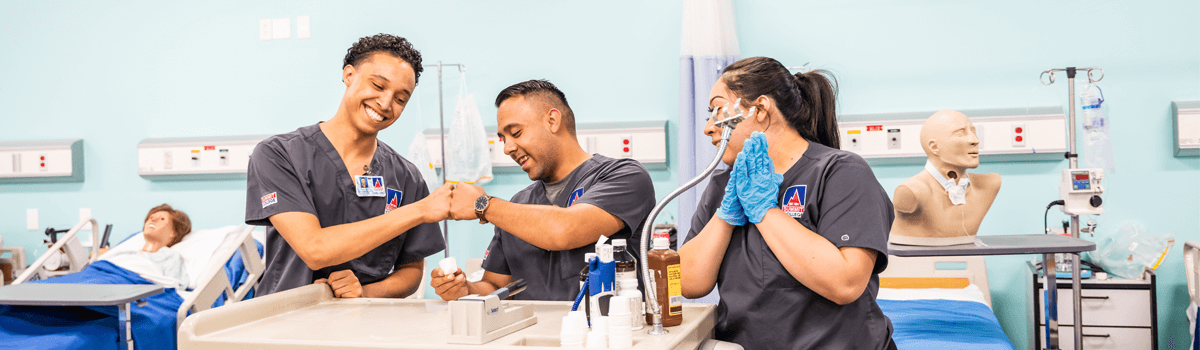
Vocational Nurse Training in Inland Empire
Hands-on Healthcare Education to Help You Take Control of Your Future
Nurses are the heart of the healthcare industry. Licensed vocational nurses (LVNs) play a unique and instrumental part in daily facility operations, patient care and provide critical support to both RNs and doctors. That makes them one of the most versatile members of a healthcare team. Vocational nurses work under the direct supervision of RNs and doctors, performing both clinical and non-clinical duties. And like so many careers in the healthcare industry, the demand for vocational nurses is growing at a much faster than average rate.
What Does a Vocational Nurse Do?
As a vocational nurse, your daily tasks may include:
- Providing basic medical care and comfort to ill, injured, or convalescing patients, changing bandages and helping with bathing and dressing
- Monitoring patients’ health by checking vital signs, like blood pressure and body temperature
- Discussing care with patients, listening to their concerns, and reporting issues to supervising nurses or physicians
- Documenting patient care and maintaining health records
Yes, I’m Interested. Tell Me More.
Contact us today for more information, and one of our admissions representatives will provide you with more valuable information, such as:
- Admissions Requirements
- Enrollment Support
- Tuition & Financial Aid
- Curriculum Details
- Program Features
- Placement Services
What Will I Learn in a Vocational Nursing Program?
The Vocational Nursing program at Summit College San Bernardino trains you to perform duties that may include preparing patients for exams, performing routine laboratory tests, assisting physicians and registered nurses with tests and procedures, recording patients’ vital signs, and updating patient medical records. For additional support, all of Summit’s Allied Health programs offer free tutoring and career services assistance.
What will course instruction look like?
The courses within this program are taught through a combination of lecture, lab, and clinical work. Lecture hours include faculty instruction, classroom activities, assessments, etc. The lab hours are comprised of hours specific to gaining industry related skills included, but not limited to, exercises and activities that strengthen and broaden a student’s understanding of the job duties required of them in their chosen field. Clinical hours are simulated exercises that prepare the students to assist patients upon completion of their program.
Is Career Training Right for You?
Take the Summit College Career Training Readiness Quiz
The fun, online quiz takes 3 minutes to complete, and you’ll get a personalized report. Identify your strengths and social style, plus the training and positions you’re best suited for.
What vocational nursing classes will I take?
Summit College’s San Bernardino Vocational Nursing curriculum includes modules that cover topics like:
- Fundamentals for Nursing
- Nursing Leadership and Management
- Nutrition for Nursing
- Adult Medical Surgical Nursing
- Maternal Newborn Nursing
- Pediatric Nursing
- Pharmacology for Nursing
- Body Structures and Functions
- Medical Terminology for Health Professions
- Foundations and Adult Health Nursing
- Nursing NCLEX Preparation and Review
How important is clinical experience with Vocational Nursing training?
At Summit College San Bernardino, it’s essential. That’s why the VN program includes 954 hours of supervised lab-skills and clinical training designed to help students bridge the gap between classroom theory and real-world patient care. During this hands-on training, students learn practical skills, work directly with patients under supervision, and gain experience across different healthcare settings. This immersive clinical component helps build confidence, develop professional competencies, and prepare students for the responsibilities of entry-level nursing roles.

What Is the Job Outlook for Vocational Nurses in California?
Much like many healthcare careers, licensed vocational nurse employment is projected to grow by 3% through 2034 according to the Bureau of Labor Statistics, with almost 55,000 job openings annually as employers both expand their workforce and try to fill places as workers retire.
California is expected to see significantly more growth, however, with Projections Central from the U.S. Department of labor estimating licensed vocational nursing jobs will grow by 18% through 2032.
Where can LVNs work?
Graduates of Summit College’s Vocational Nursing program can seek employment in healthcare facilities throughout the Inland Empire area, including:
- Acute Medical/Surgical Hospitals
- Convalescent Hospitals (Long Term Care, Skilled Nursing)
- Home Care Agencies
- Outpatient Clinics
- Doctor’s Offices
- Ambulatory Surgery Centers
- Dialysis Centers
- Blood Banks
- Psychiatric Hospitals
- Correctional Facilities
What jobs can I get in San Bernardino as an LVN?
Here are just some of the career possibilities:
- Licensed Vocational Nurse (LVN)
- Charge Nurse
- Clinic LVN
- Clinic Nurse
- Home Health LVN
- Office Nurse
- Pediatric LVN
- Private Duty Nurse
- Radiation Oncology Nurse
- Triage LVN
San Bernardino Campus
With modern classrooms equipped with audiovisual technology, labs outfitted with updated equipment and instruments, computer labs, and a student lounge, the San Bernardino campus of Summit College is set up to provide a quality education in both our allied health and skilled trades programs. Parking is provided to students at no charge.
Address and Location
Address
804 East Brier Drive
San Bernardino, CA 92408
Located near I-10 and a short walk from the Tippecanoe Metrolink Station, conveniently situated near Colton, Loma Linda, Riverside, and more
Phone Number and Hours
General Business Hours: 8:00 AM to 5:00 PM, Monday – Friday
Phone Number: 888.504.2552
Why Should You Choose Summit College San Bernardino?
If you’re looking for a secure career that is all about helping others, a future as an vocational nurse has all of that and more. Summit College can help you get the education and training you need to get it done! That’s what we’ve been doing since 1991 — helping students just like you follow their dreams of an exciting, fulfilling career as a vocational nurse. With hands-on training from caring instructors who have lived and breathed the life of a vocational nurse in the real world, we’ve got your back all the way across the finish line and beyond.
- Professional faculty focused on your success: Your instructors have all done the job you’re training for and use their experience to prepare you for real-world situations. You’ll develop clinical skills through hands-on learning and benefit from small class sizes.
- Curriculum that provides a broad foundation: In addition to clinical and skills fundamentals, you’ll learn about various specialties, including obstetrics, pharmacology, pediatrics, nutrition and psychology and patient education for a solid foundation.
- Flexible schedules: Choose from day or evening/weekend classes that adapt to your lifestyle and responsibilities. Complete the program in just 12 months (full-time) or 18 months (part-time).
Ready for What’s Next?
Your Path to Success Starts Now!
Frequently Asked Questions
How Do I Become an LVN in California?
The Board of Vocational Nursing and Psychiatric Technicians in California lists five different methods for qualifying to sit for the LVN licensure examination, and the first two of those involve enrolling in and graduating from an approved Vocational Nursing program like the one we offer at Summit College San Bernardino.
Outside of a structured training program, the options involve completing months of equivalent education and experience.
Any Difference in LVN vs. LPN? And What Is the Difference Between Vocational Nurse and Registered Nurse?
Licensed vocational nurse (LVN) and licensed practical nurse (LPN) are essentially the same job. The difference is primarily a regional thing, with the states of California and Texas calling them LVNs and the rest of the states calling them LPNs. In both cases, they perform basic nursing care under the supervision of physicians and registered nurses (RNs).
Vocational nurses and registered nurses have a lot more differences, however. RNs have more educational requirements and have to hold at least an associate degree in nursing, but often a bachelor’s degree in nursing is preferred. LVNs can provide a lot of different patient care duties, like monitoring vitals and changing dressings, while RNs perform more advanced care, which can include administering medications, starting IVs, and more.
What Kinds of Certifications or Licenses Do I Need to Be a Licensed Vocational Nurse?
Vocational nurses in California are required to sit for and successfully pass the NCLEX-PN licensing exam, a standardized test used to determine if it’s safe for you to step into entry-level roles as an LVN. You are permitted to take the exam eight times in a calendar year, with at least 45 days between the administration of exams.
How Long Does It Take to Become a Licensed Vocational Nurse?
In general, vocational nursing programs tend to take around a year if you’re attending classes full-time. The Vocational Nurse program at Summit College San Bernardino takes exactly a year (52 weeks) for our full-time track, but students who need more flexibility, like evening and weekend classes, can take the program over the course of around 18 months.
How Much Does Vocational Nursing School Cost?
This is difficult to pin down to one number as it depends on the type of institution you attend, the length of the program, the cost per credit hour, etc. At Summit College San Bernardino, you can train to become a licensed vocational nurse for less than the average cost of tuition for one year at a traditional California university. Summit College also has access to a number of financial aid options to support our students.